The largest and most trusted neurofeedback center in California |30,000+ brain maps reviewed |20 years in neuroscience |Over one hundred 5-STAR client reviews
Photobiomodulation Therapy
Near-infrared light stimulation. A new way to energize your brain.
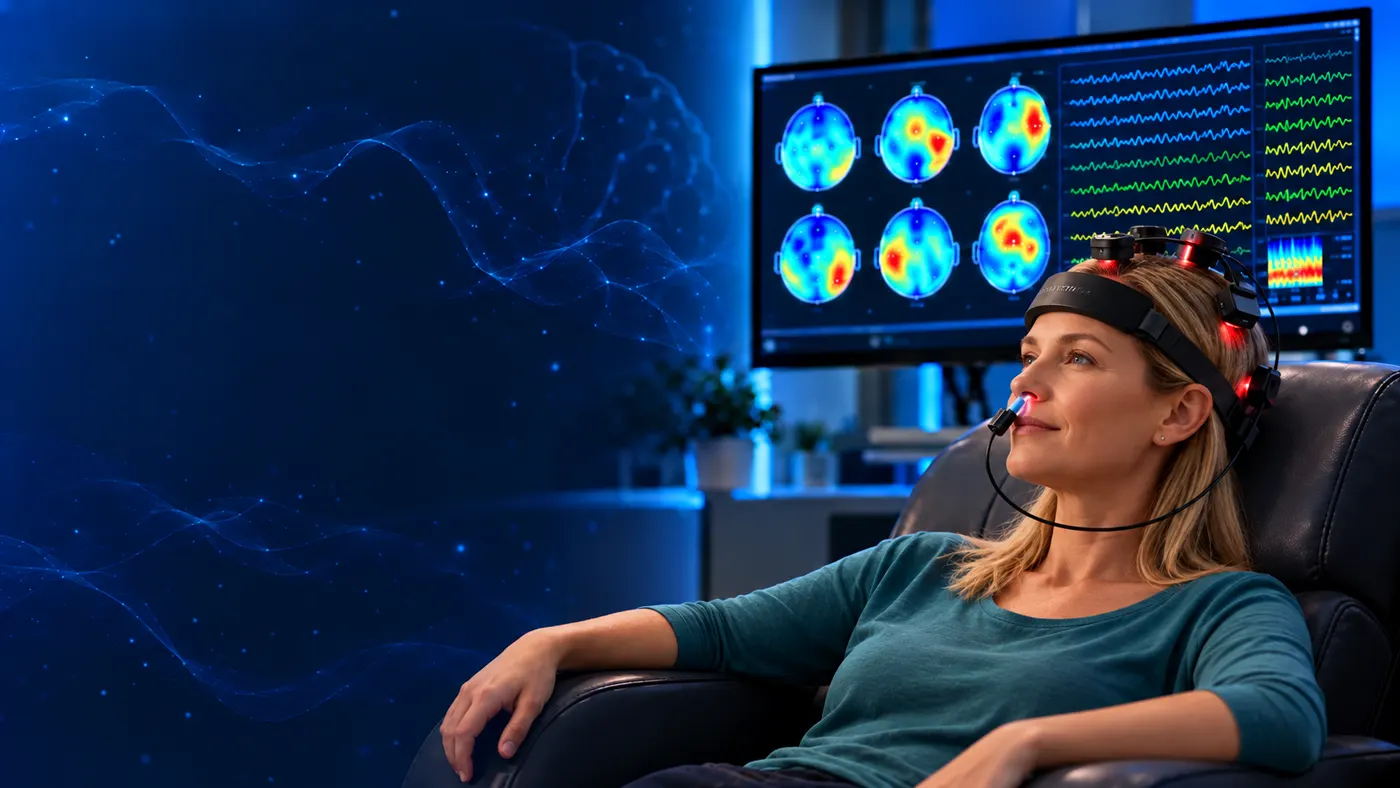
Near-infrared light brings a different dimension to brain support. Paired with neurofeedback, it gives us a way to combine stimulation with active learning.
Photobiomodulation (PBM), often referred to as light therapy, is a non-invasive treatment that uses near-infrared (NIR) light to enhance cellular health and performance.
This light is delivered through specialized LEDs and directed at targeted areas of the body to stimulate biological responses. With the appropriate wavelength and sufficient irradiance, PBM can reach deep tissue depths to support different therapeutic goals.
At its core, PBM helps cells produce more ATP—the energy molecule essential for all cellular activity. With increased energy, cells are better equipped for repair, regeneration, and maintenance, which can lead to improved recovery and overall well-being.
The fuel: Mitochondrial activation
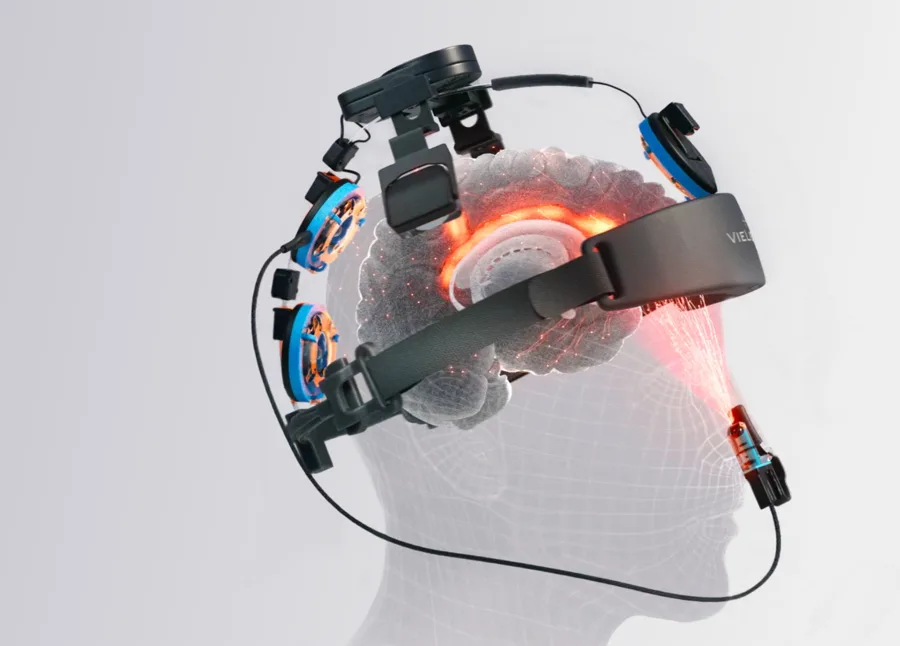
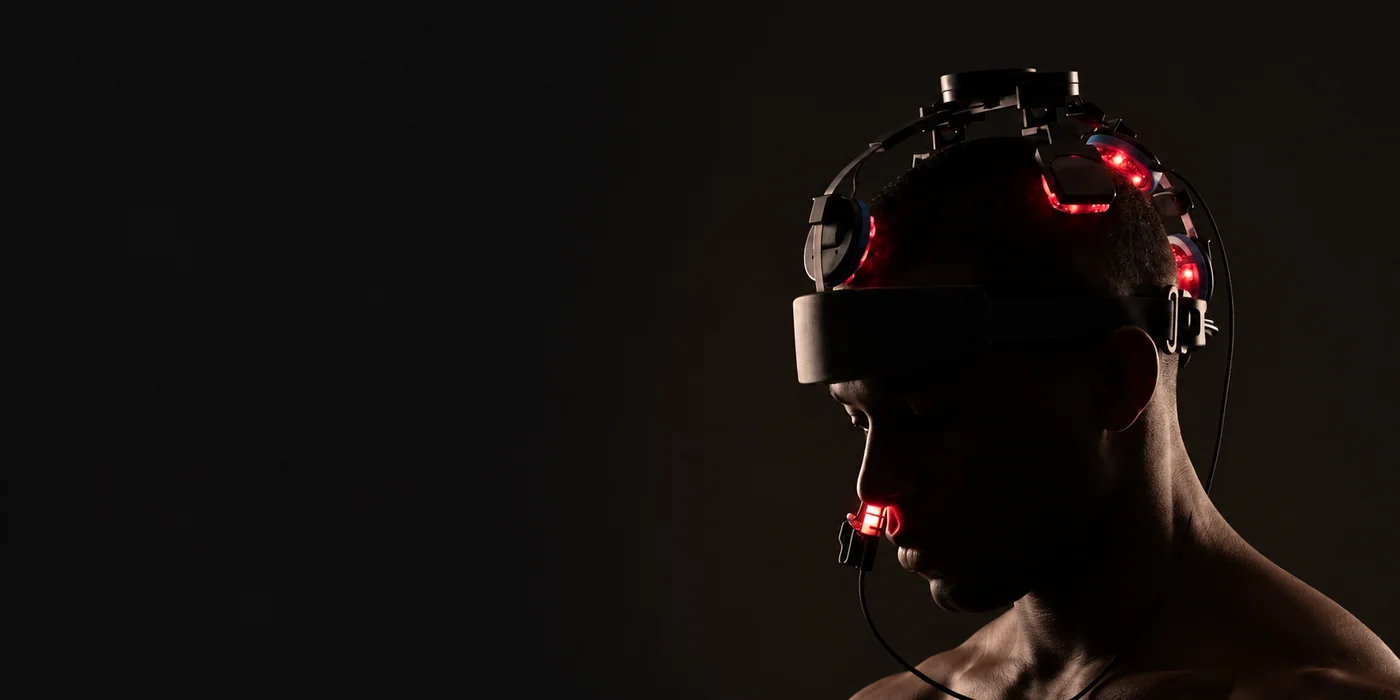
Vielight devices utilize Near-Infrared (NIR) light with a world-leading irradiance. This light penetrates the skull and reaches brain cells, where it is absorbed by mitochondria.
ϟ
ATP Boost: This process improves neural energy for your neurons.
◎
Performance Result: Higher cellular energy translates to faster processing, better focus, and more resilient brain tissue.
The pulse: Brain optimization
The light pulses at 10Hz (Alpha) or 40 Hz (Gamma), the technology helps “tune” the brain’s electrical activity.
ϟ
Cognitive Flow: 40 Hz is associated with peak concentration, memory, and high-level information processing.
◎
Default Mode Network: 10 Hz helps synchronize major brain networks, reducing the “mental noise” that keeps your brain from relaxing.
The delivery: The intranasal-transcranial advantage
Standard light therapy (tPBM) only hits the top of the brain. Vielight’s itPBM adds a second, critical channel:
ϟ
Transcranial (The Top): Powerful LEDs deliver energy to the cortex for executive function and motor control.
◎
Intranasal (The Bottom): Our patented nasal applicator allows light to bypass thick bone and reach the brain’s ventral structures—the deep survival centers and the “Cone of Vulnerability” most at risk in contact sports.
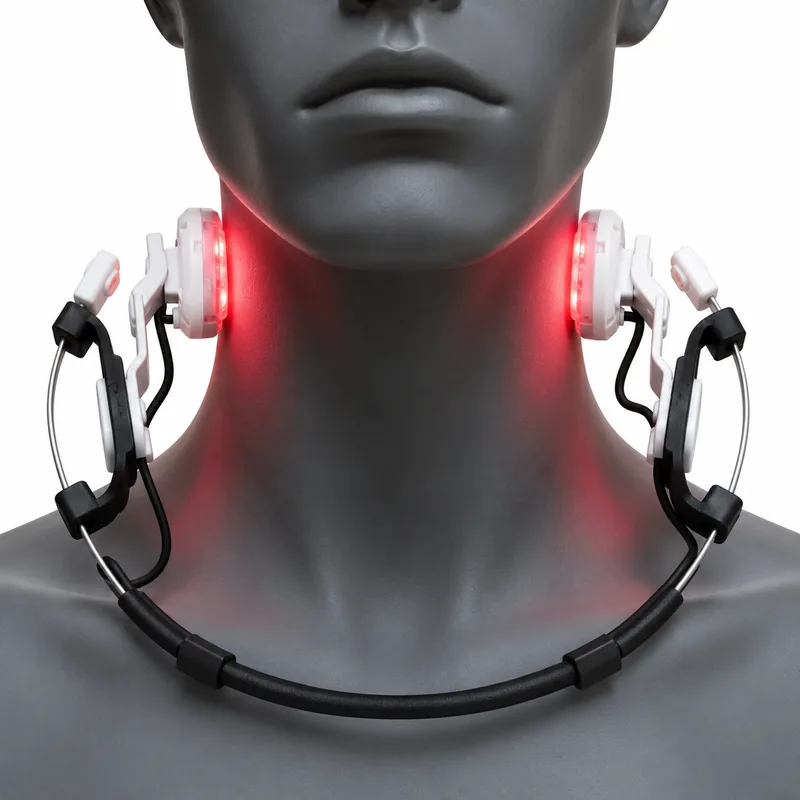
The Vagus Nerve: Addressing the brain/gut connection.
Enables non-invasive vagus nerve stimulation via photobiomodulation.
Enhances brain-body connectivity and improves the brain-gut connection.
Promotes healthy HRV and stress relief, leading to increased neuroplasticity.
What is brain photobiomodulation?
The brain, our most complex organ, relies on mitochondria in each cell as energy-producing “batteries.”
Photobiomodulation improves mitochondrial performance. This boost in cellular energy helps heal brain cells, repair neuron connectivity, and improve brain efficiency, ultimately enhancing overall brain function.
Near-infrared light, especially at 810 nm, penetrates deepest into brain tissue. This light is delivered through specialized LEDs and directed at targeted areas of the body to stimulate biological responses. With the appropriate wavelength and sufficient irradiance, PBM can reach deep tissue depths to support different therapeutic goals.
At its core, PBM helps cells produce more ATP—the energy molecule essential for all cellular activity. With increased energy, cells are better equipped for repair, regeneration, and maintenance, which can lead to improved recovery and overall well-being.
Preparing the brain for practice
Why We Pair Photobiomodulation with Neurofeedback
At Brain Performance Center, we combine Photobiomodulation (PBM) with Neurofeedback because we believe that preparing the brain for training may help it respond more effectively. PBM uses specific wavelengths of red and near-infrared light to stimulate cellular processes involved in energy production, circulation, and cellular signaling.
Our goal is to help fuel the brain with the energy it needs while practicing healthier patterns of brain activity. Think of PBM as helping the brain get into a more optimal state, while neurofeedback provides the repeated practice needed to learn how to regulate and maintain that state.
Support first. Independent practice next.
I often compare this approach to working with a personal trainer. When you're learning to lift weights correctly, a trainer may initially assist you with the movement, helping you achieve the proper form so you can experience what it feels like. But that assistance alone doesn't teach you to perform the movement independently. You still need to practice until your muscles and nervous system learn to reproduce it on their own.
Our goal isn't simply to help your brain function better while you're in our office. It's to help you develop stronger, more efficient patterns of brain regulation that you can carry into everyday life.
Explore the research
The science behind photobiomodulation.
Select a topic to explore the research.
Cognitive Agility+
Enhances divergent thinking and improves focus/flow states.
Photobiomodulation, or PBM, uses red or near-infrared light delivered through a device. On this page, you can explore how the technology works and the research behind different applications.
How is PBM different from neurofeedback?
PBM delivers light. Neurofeedback records brain activity and uses feedback, such as sounds or a changing video, to guide practice. Our approach brings these different tools together in a personalized plan.
How do I know whether PBM fits my plan?
Talk with our team about your goals, health history, and current care. We can explain how we use PBM and where it may fit alongside your brain training.
Where can I learn more about the research?
Select a topic in the research diagram above to open its research page or video.
Your next chapter
Your brain influences every aspect of your life. Start looking after it.
We routinely check our heart, blood pressure, cholesterol, and other measures of health. Yet the one organ responsible for regulating how we think, feel, sleep, respond to stress, and experience the world is often overlooked until a major problem develops.