
Photobiomodulation research · 2026
Targeted light. Stronger analytical problem-solving.
A randomized, double-blind trial found that targeted near-infrared stimulation improved verbal problem-solving and inhibitory control compared with sham stimulation.
How the study worked
University of Deusto researchers assigned 56 healthy adults to active stimulation or sham, with 28 people in each group. Participants completed cognitive tests before and during one 20-minute session.
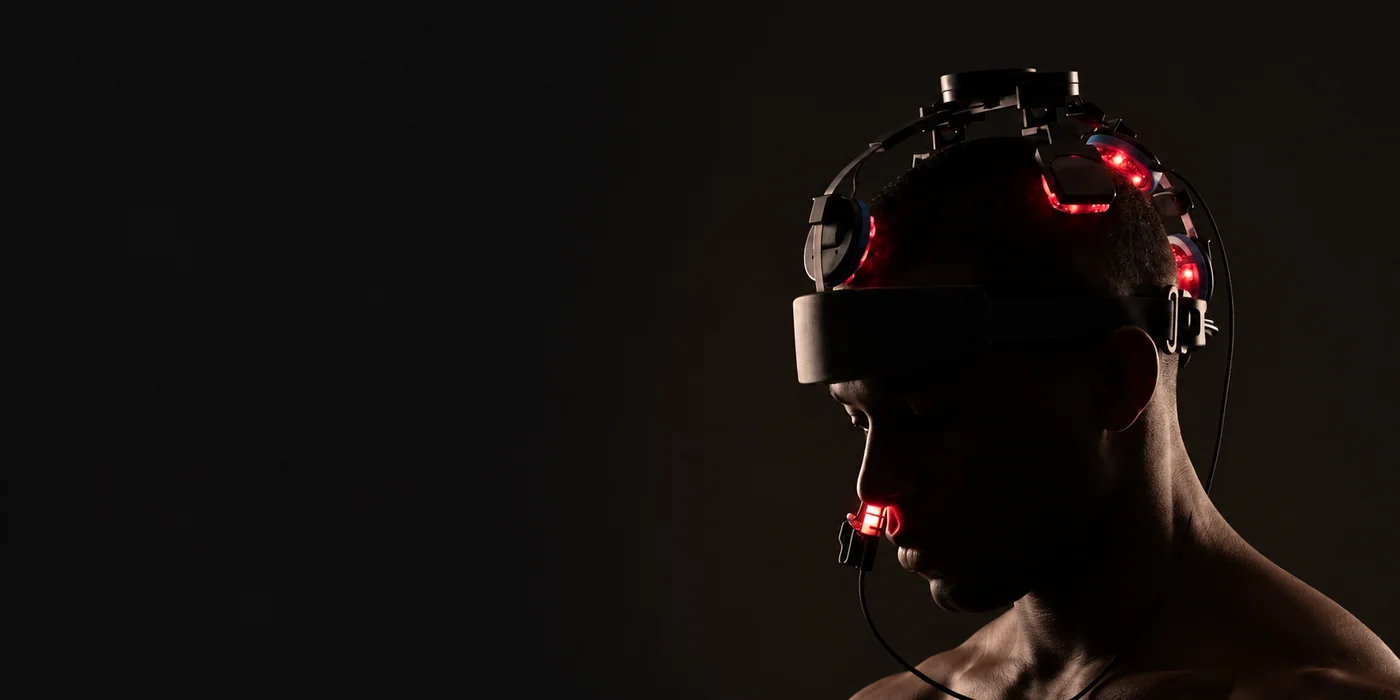
Two LEDs targeted the left and right dorsolateral prefrontal cortex at F3 and F4. The protocol used 810 nm light, pulsed at 40 Hz with a 50% duty cycle. Participants could not reliably distinguish the active device from sham.
What improved
Scores adjusted for baseline performance favored active stimulation:
| Measure | Active PBM | Sham |
|---|---|---|
| Verbal Remote Associates Test | 10.31 | 8.72 |
| Stroop interference score | 8.95 | 5.58 |
The first test assesses finding a common solution from different clues. The second measures resisting distracting information. Both improvements were statistically significant. Visual convergent thinking and overall divergent-thinking scores did not differ significantly.
Why the target matters
The prefrontal target supports selecting and refining ideas. An earlier study targeting the default mode network instead improved idea generation. Together, these findings highlight how the location of stimulation can shape the cognitive skill being studied.
The gains in problem-solving were not explained by improved Stroop performance. These results describe immediate performance during a single session; lasting effects were not measured.
Study reference
Peña J. and colleagues (2026). The impact of transcranial photobiomodulation on the bilateral dorsolateral prefrontal cortex in enhancing convergent thinking and Stroop test. The Journal of Creative Behavior, 60(2), e70112. Read the published study.