← Who we help

Brain training for Children

Understand the brain behind the struggle.

The difficult mornings. The unfinished homework. The big feelings that seem to arrive without warning. When your child is struggling, the whole family feels it.

Symptoms We Can Help

Look beyond the behavior

What might your child’s brain be struggling to do?

Sometimes a child may be trying much harder than we realize. When a brain network is struggling, something that comes easily to other children can require tremendous effort—yet from the outside, it can look like they simply aren’t trying.

1

Dysregulation
in Brain Networks

Brain networks are not working together efficiently, which makes certain brain functions much harder than normal.

2

The Child
Struggles More

Because these brain functions are harder, the child has to put in more effort than their peers, even for simple tasks.

3

The Outward
Behavior

From the outside, it may look like the child isn’t performing the function well — and can be misunderstood as not trying, being lazy, or not capable.

Symptoms We Can Help

“A diagnosis may describe WHAT a child is experiencing, but a brain map can help uncover the WHY”

At Brain Performance Center, our goal is to look beyond the behavior and understand the brain networks that may be contributing to or triggering it. We begin with a brain map to help us identify networks that may be working too hard, not working efficiently enough, or struggling to communicate effectively. From there, we develop a personalized plan designed to support and strengthen the areas that need it most.

The goal isn’t to change who your child is. It’s to help their brain work more efficiently, so everyday life becomes easier.

Below are many of the symptoms we help every day.

THE BRAIN PERFORMANCE PROCESS

Choose either Southern California or remotely anywhere in the world.

  1. STEP 01: BRAIN MAPPING

    Objectively Measure Your Child’s Brain Function

    The first step to improving brain function is understanding what is actually happening in your child’s brain. Two children can have the same symptoms, yet have very different patterns of brain activity causing them. A qEEG brain map allows us to objectively measure the brain’s electrical activity and see which areas may be overactive, underactive, or not communicating efficiently. Instead of guessing based on symptoms alone, we start by looking at the brain itself. Because the better we understand your child’s unique brain, the more precisely we can determine what it needs to function better.
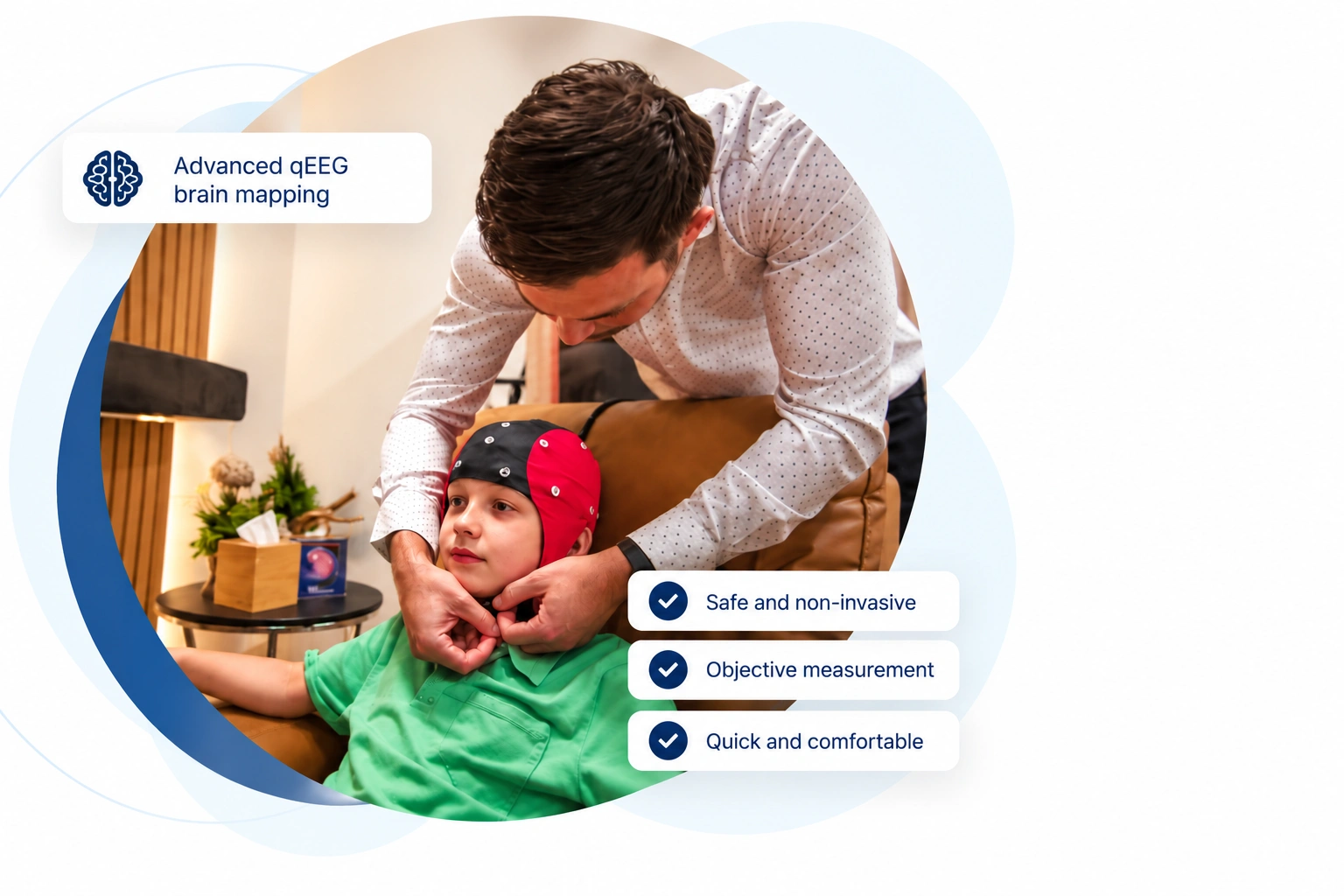
    A child being fitted with a qEEG brain mapping cap, with callouts for safe and non-invasive, objective measurement, and quick and comfortable assessment
  2. STEP 02: REVIEW OF FINDINGS

    Build Your Child’s Personalized Plan

    Once we understand what is happening in your child’s brain, we can determine the best approach for helping it function better. Instead of making recommendations based on symptoms alone, we use your child’s brain map to identify the specific networks that may need support and select therapies designed to target and strengthen those areas. We also consider factors such as sleep, nutrition, genetics, stress, past concussions, and other influences that may be affecting brain function. The goal is to create a personalized plan based on what your child’s unique brain actually needs.
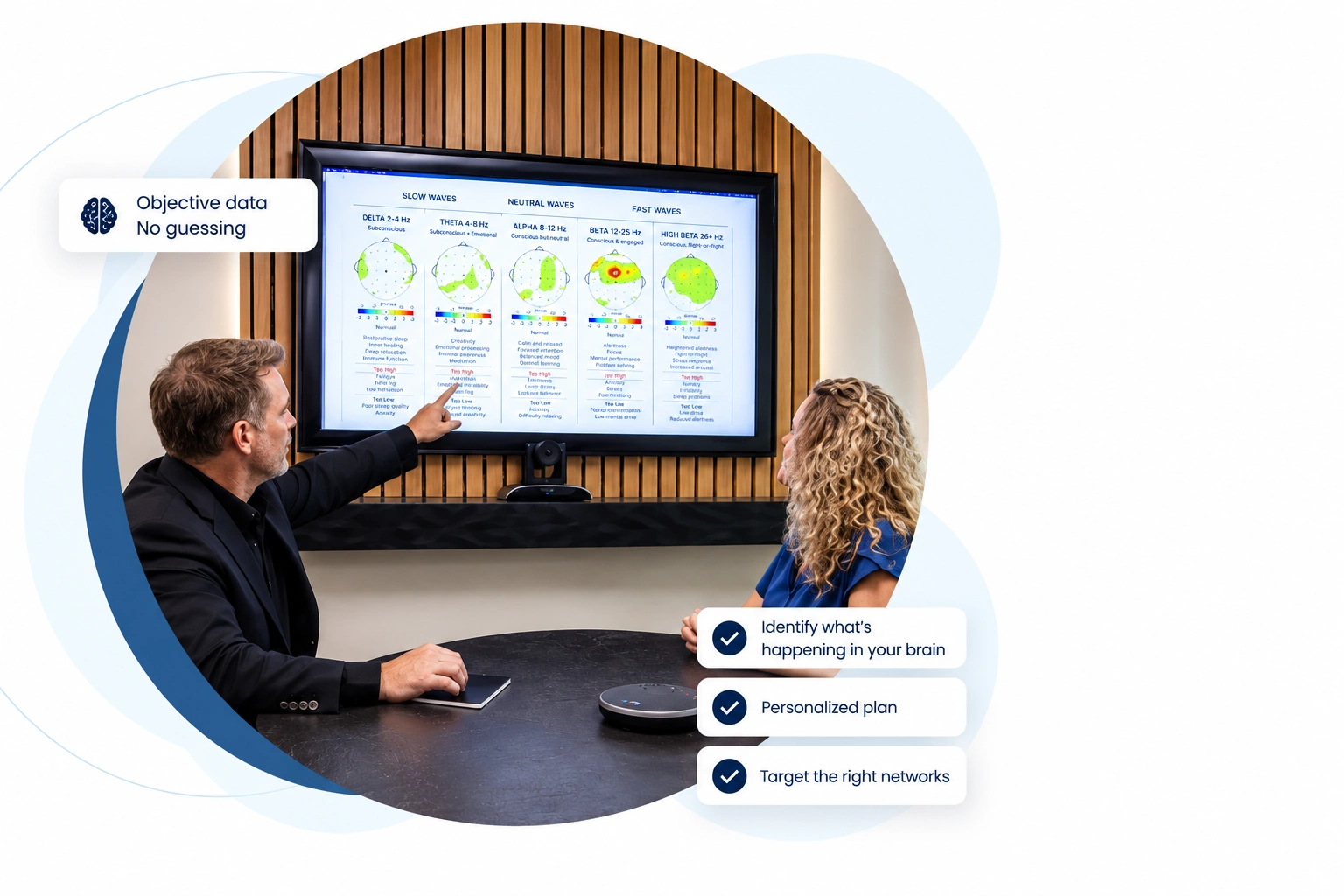
    Brain map consultation with callouts for objective data, identifying what is happening in your child’s brain, a personalized plan, and targeting the right networks
  3. STEP 03: BRAIN TRAINING

    Train Your Child’s Brain to Function Better

    Once we know which brain networks need support, we can begin training them to function better. Neurofeedback is at the core of this process, using real-time information from your child’s brain activity to help strengthen underperforming networks, improve regulation, and reinforce healthier patterns of brain function. Depending on your child’s individual needs, we may also incorporate therapies such as photobiomodulation, Alpha/Theta limbic training, HRV biofeedback, nutritional support, and other approaches designed to support brain health and neuroplasticity. Think of it as physical therapy for your child’s brain—identify what needs strengthening, target it, and repeatedly train it toward healthier function.
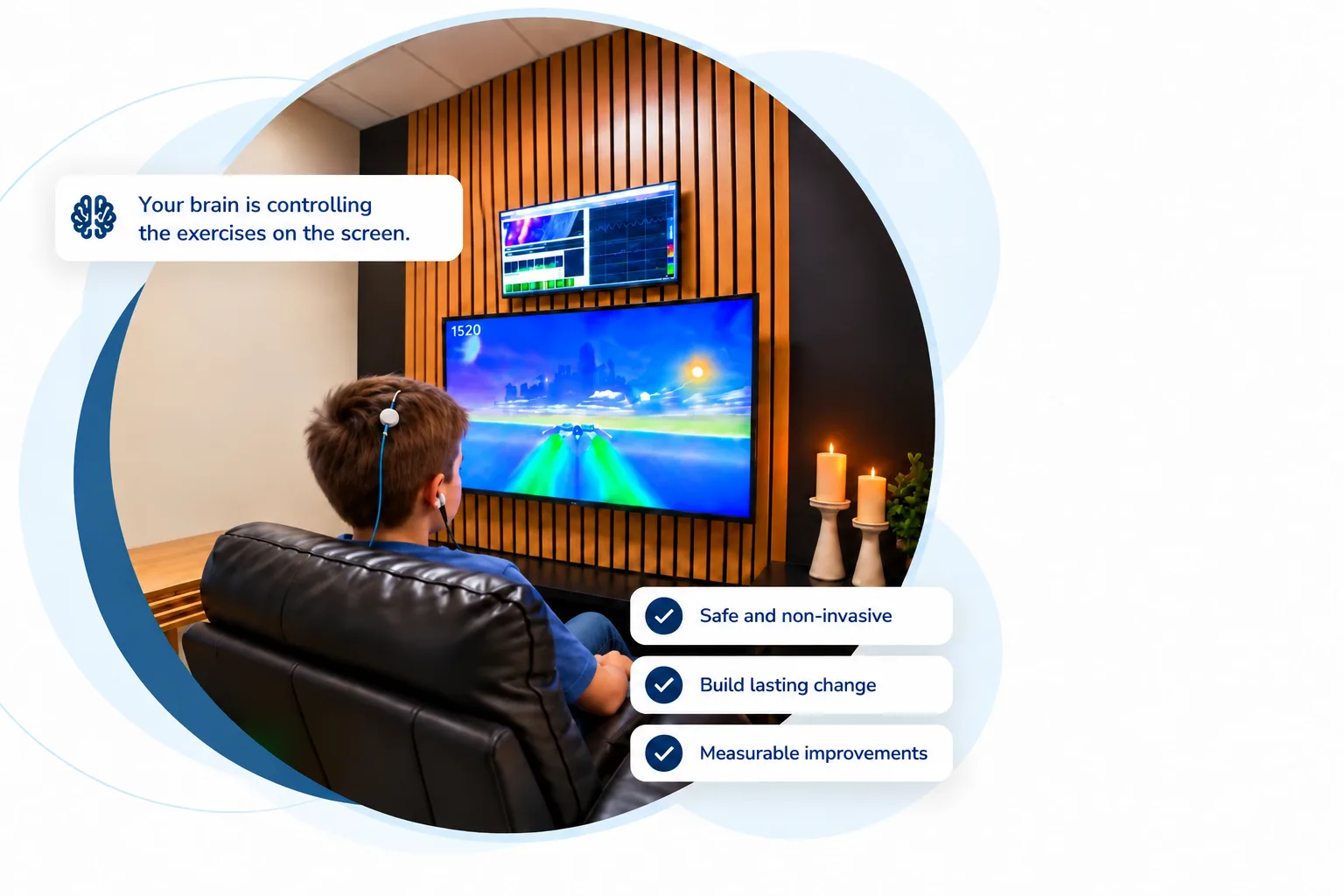
    A child using neurofeedback in the Brain Performance Center office, with callouts explaining that brain activity controls the screen exercises, safe and non-invasive training, lasting change, and measurable improvements
  4. STEP 04: PROGRESS TRACKING

    Objectively Measure Your Child’s Progress

    Throughout your child’s program, we repeat your child’s brain map and objectively compare it to your child’s starting point. This allows us to see how your child’s brain is changing, identify which networks are improving, and make adjustments when additional support is needed. We don't only rely on how your child feels or the changes you observe—we also measure the changes happening in your child’s brain.

    Our goal isn't simply to complete a program. It's to create measurable improvement in how your child’s brain functions.
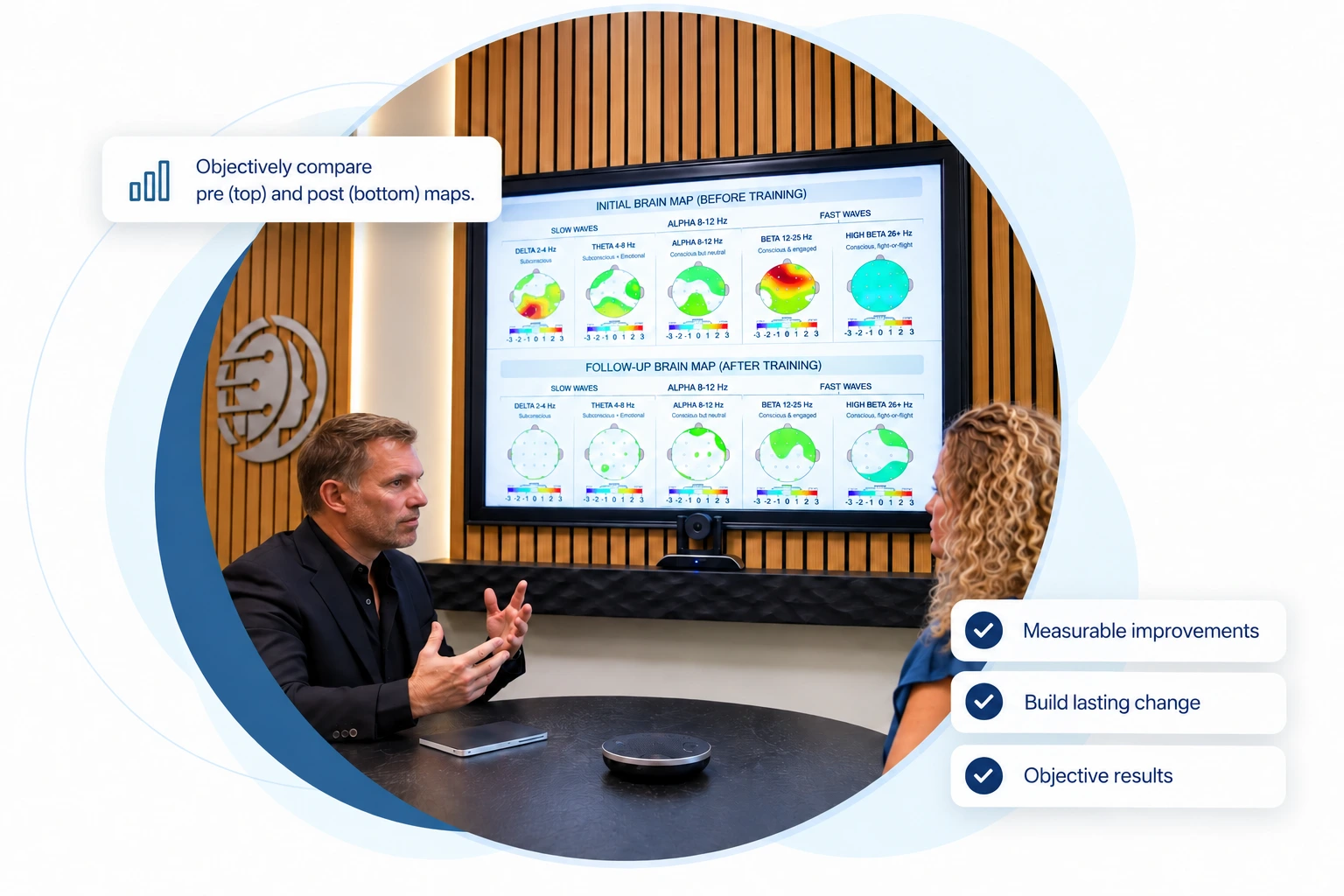
    Brain map consultation comparing initial maps on the top of the screen with follow-up maps below, with callouts for measurable improvements, lasting change, and objective results

See what your child’s brain is doing

Objectively Measure and Train Your Child's Brain

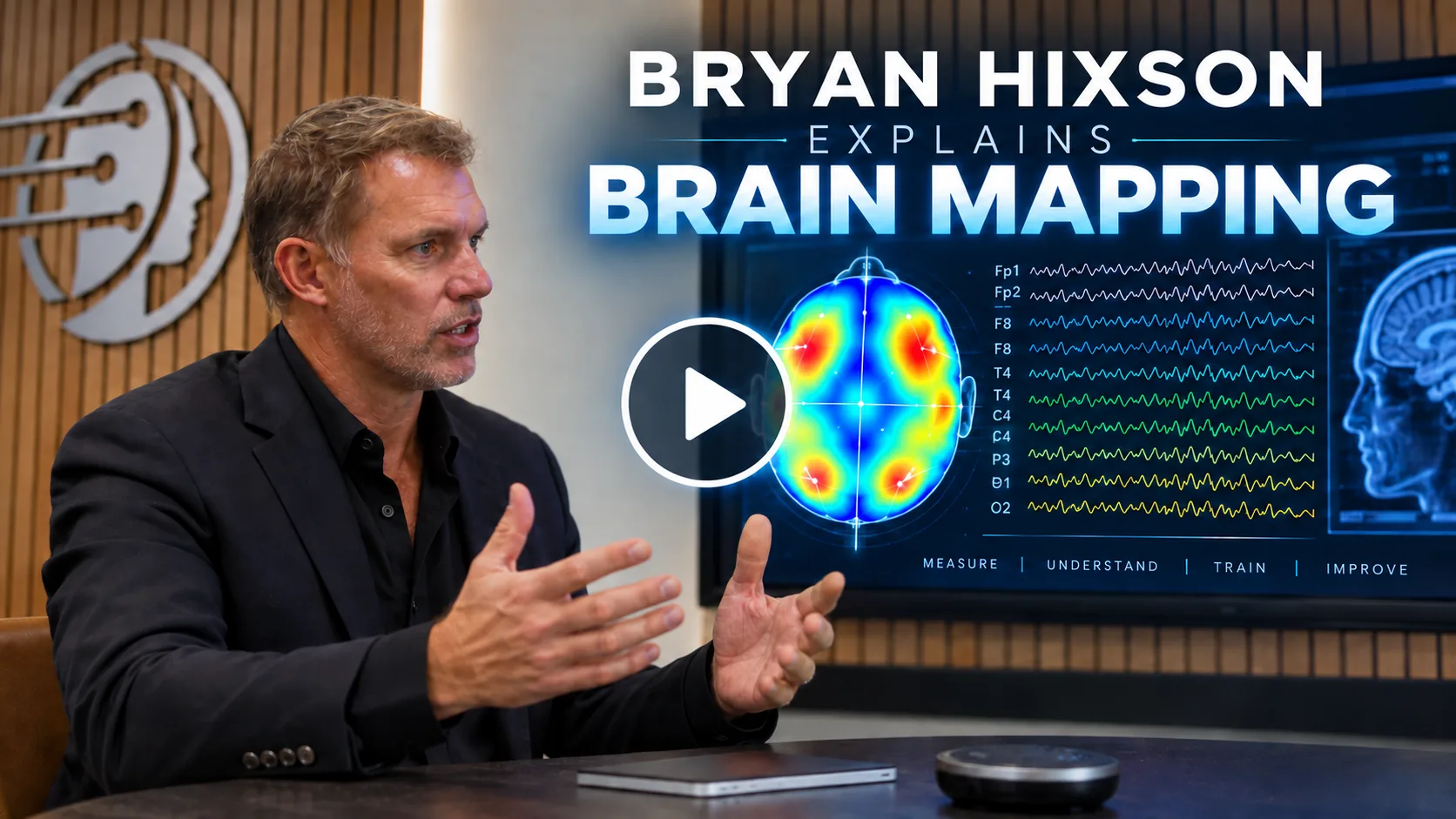
Two children can struggle with the same behavior for different reasons. A qEEG brain map gives us objective information about your child’s electrical brain activity, helping us examine patterns related to attention, rest, and regulation.
What Our Clients Are Saying About Their Kids

Over 100 5-star client reviews across Google and Yelp.

Scroll to explore 18 family stories.
★★★★★Yelp
“To say we've seen a turnaround from nearly all of these issues is an understatement; he is far more resilient, content and much less anxious. He takes less prodding to move from one task to the next, his focus has improved, and his sensory aversions seem to have calmed notably.”
Kelly P.
★★★★★Google
“My daughter completed 30 sessions of therapy following her first scan and boy were we pleasantly surprised. Our daughter is thriving. Her focus is incredible, her emotional outburts are milder and shorter, and her ability let go is nothing less than remarkable.”
scot wallach
★★★★★Google
“My 6 year old son, my wife, and I are all doing remote brain training. We have experienced an amazing positive shift in our son's behavior/disposition and my wife and I feel less stressed and better equipped to handle challenging parenting situations.”
Jensen Reed
★★★★★Google
“The progress has been consistent, and we are blown away by how much calmer and more focused our son has become. The team was also incredibly professional, supportive, and dedicated to ensuring that each session was tailored to our son’s specific needs.”
Ben Salem
★★★★★Google
“My son had a hard time focusing and always on a edge so about 3 years ago I decided to do nuerofeedback. Honestly it helped so much, he became a lot calmer and able to do better at school. After seeing success with my 7 year old, I decided to do it myself.”
Julie Vdovichenko
★★★★★Google
“My sons sleep has improved and so has his school performance. He is not in as bad of a mood in the morning and wakes up easier. School has gone abit better and now he has to work on his study skills.”
Charlie Emma
Client testimonialTestimonial
“We have 4 kids that came to us from traumatic backgrounds. We've been through years of trauma training and knew their brains work differently. We just didn't have physical proof other than behavior issues. Then we had the Brain Performance Center do brain maps on all 4 kids.”
Pastor Mark & Michelle McKinney
★★★★★Yelp
“Another major perk is the staff. Tanner is the nicest, smartest, and professional person who walked us through the brain maps and Nuerofeedback session. My son doesn't ever say he's going to the doctors, he say's he's going to see his friend Tanner.”
Jenny B.
★★★★★Google
“The Brain Performance Neurofeedback Center has been a life-changer for our son! After suffering from concussion-related symptoms that started to affect his daily life, we were unsure of what to do. From the staff to the doctor, and even the remote neurofeedback coach, everyone has been incredibly patient and understanding of our son’s challenges.”
Candace Meza
★★★★★Yelp
“Awesome Center and very professional team!. They have definitely helped my son so much! Highly recommend!”
Maria G.
★★★★★Yelp
“… my son got great results …”
Judy B.
★★★★★Yelp
“The Brain Performance Center helped my daughter several years ago. A new issue has cropped up and they are helping her again. Brian is extremely patient and helpful with explaining the results of brain scans and a recommended protocol to resolve any issues.”
Barbara A.
★★★★★Yelp
“Our son began the neurofeedback sessions, and now after completing them he is doing so much better! He's going to movies again with us, he's able to socialize with people again, and is ready to start driving again. Thank you so much, Bryan!”
Theresa P.
★★★★★Google
“We started our youngest daughter, who is special needs, to see if this could help her as well. She is only about half way through her program so the jury is still out, but she enjoys the brain training. So that alone is amazing!”
Nell Able
Client testimonialTestimonial
“The work over the last few months has been shocking on just how well [my son] is doing "With noises I'm a lot more calm" - Jack”
Jack's Dad
★★★★★Google
“My son did neurofeedback and saw great results!! In high school he was not very motivated academically and I was apprehensive when he started college. To my surprise he ended his first semester with straight A's!! He also had anger and depression issues in high school. Now, he is calmer and more focused.”
Marylou F
★★★★★Google
“This place is amazing!!’ It has helped my son and myself feel so much better mentally, emotionally and physically. The staff are super friendly, kind and so helpful!”
Janell Fanger
★★★★★Google
“She was treated at “The Brain Performance Neurofeedback Center.” The result was so successful and free her completely from this horrible high-anxiety crisis.”
Beylerian Judith

“Investing in your child’s brain may be one of the greatest gifts you can give them.”

Because a stronger, healthier brain doesn’t just change how they learn or behave—it can shape every aspect of their life.
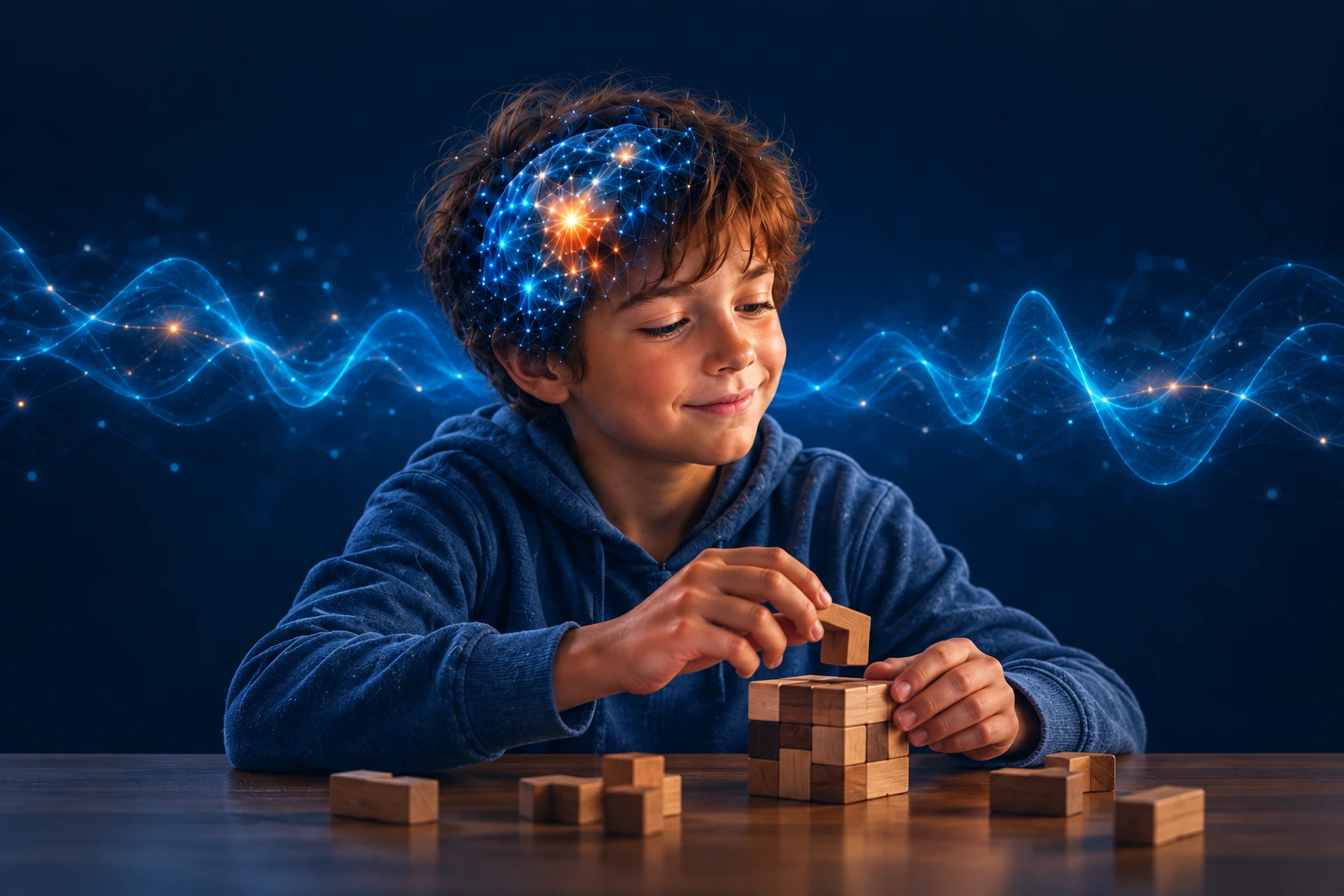
Child working on a puzzle with an illustrative glowing brain network overlay
  • Better attention
  • Improved learning
  • Emotional regulation
  • Calmer behavior
  • Less Fear
  • More capable
  • Greater confidence