
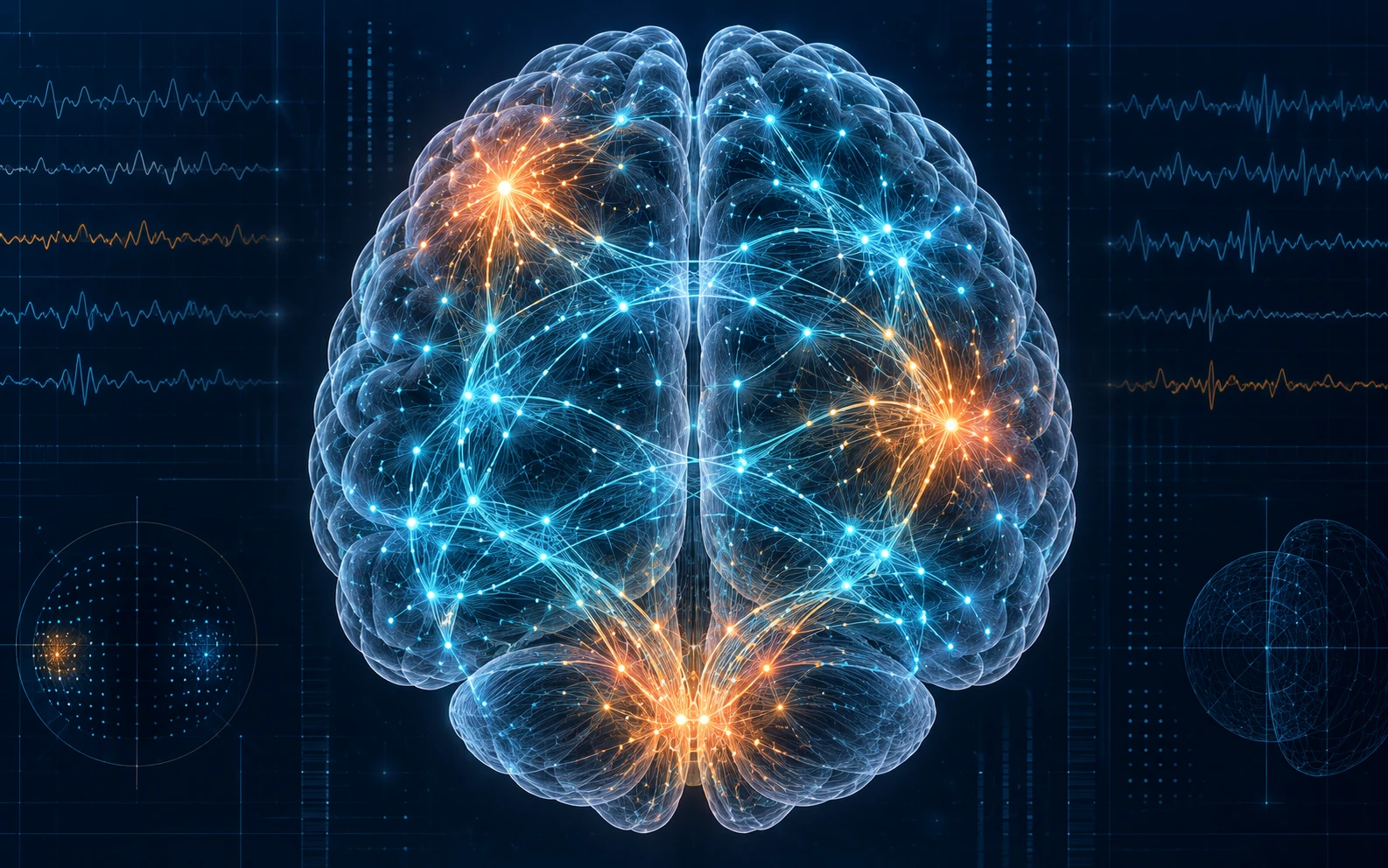
Can feedback from your own brain help you practice paying attention as you age?
A 2017 mini-review by Yang Jiang, Reza Abiri, and Xiaopeng Zhao explored neurofeedback for attention and working memory in older adults. It reviewed earlier research rather than reporting a new clinical trial.
Why attention matters
Attention helps us take in information and hold it in mind. The authors examined training that uses real-time brain signals to reward patterns associated with these abilities.
What the research suggested
Some small studies reported improvements in attention, working memory, processing speed, or executive function. Findings varied, and improvement on a training task does not necessarily mean improvement in everyday life.
A promising direction
The review proposed combining brainwave frequencies with measures of responses to specific events and communication between brain regions.
“We conclude that real-time neurofeedback, combining traditional frequency and new neuro-markers, promises to provide new hope for brain and cognitive training in older adults”.Jiang, Abiri & Zhao, 2017. Conclusion excerpt with abbreviations expanded.
Putting the findings in perspective
The authors called for rigorous, controlled testing in older adults. This review offers a reason for further investigation, not proof that neurofeedback prevents dementia or guarantees cognitive improvement.
Jiang Y, Abiri R, Zhao X. Tuning Up the Old Brain with New Tricks: Attention Training via Neurofeedback. Front Aging Neurosci. 2017;9:52. Published March 13, 2017. doi:10.3389/fnagi.2017.00052.
Read the original research →