
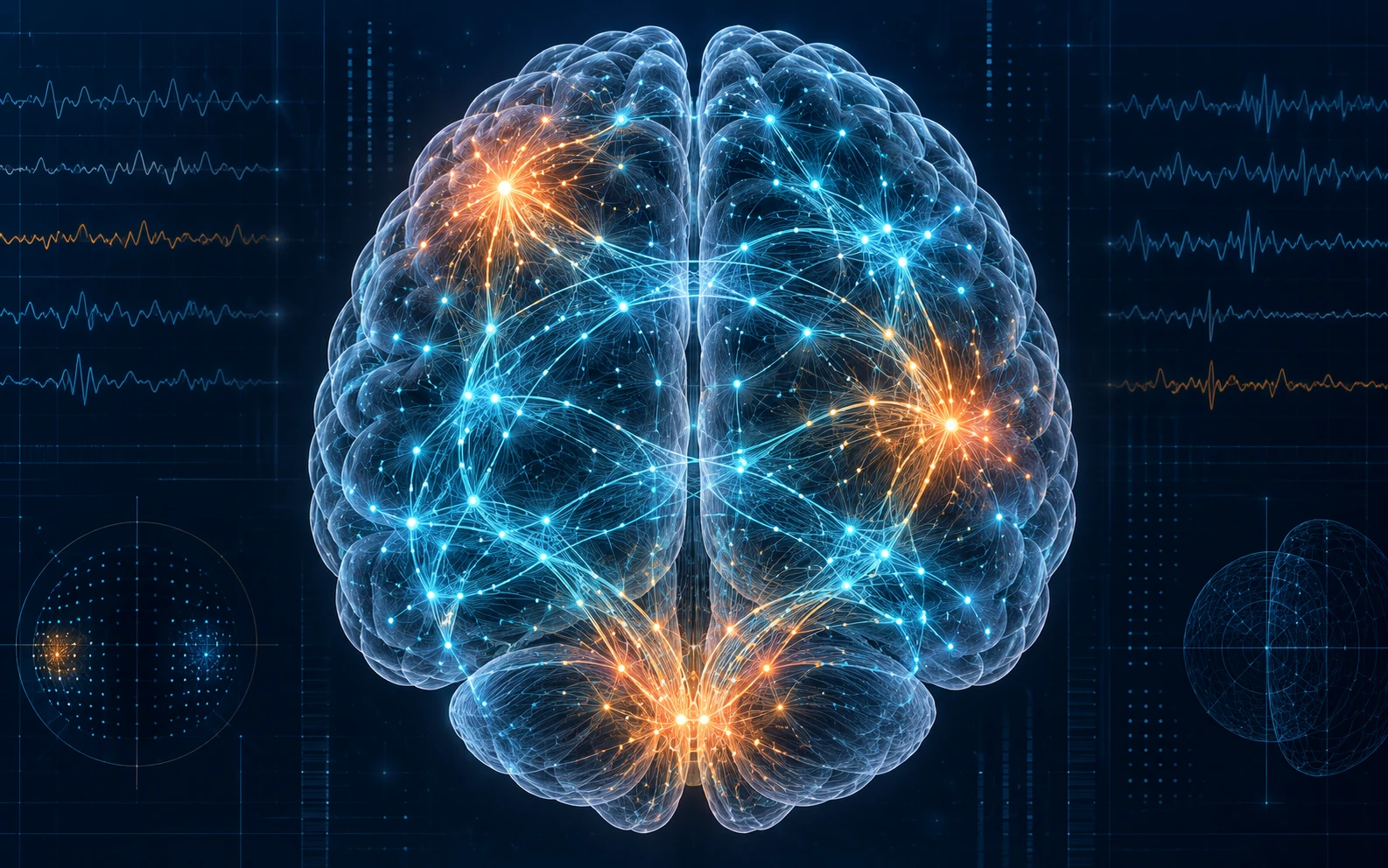
A small study explored whether practicing brain self-regulation could support cognitive performance.
How the study worked
Twenty older adults with mild cognitive impairment completed 20 SMR/theta neurofeedback sessions over ten weeks. Researchers compared cognitive testing, questionnaires, and EEG at baseline, after training, and one month later. SMR refers to sensorimotor rhythm, a pattern of electrical brain activity.
What changed
Reported improvements included global cognition on the Montreal Cognitive Assessment, delayed verbal recall, and forward digit span. Researchers also observed changes in EEG activity, with changes still evident at follow-up.
What comes next
These findings suggest a promising direction for research into memory and attention. However, this was a small pilot without a control group, and some enrolled participants did not complete the study. Larger randomized trials are needed to determine whether neurofeedback itself caused the gains and whether benefits last. Preventing further decline remains a research question, not an established outcome.
Marlats F, et al. SMR/Theta Neurofeedback Training Improves Cognitive Performance and EEG Activity in Elderly With Mild Cognitive Impairment: A Pilot Study. Front Aging Neurosci. 2020;12:147. doi:10.3389/fnagi.2020.00147.
Read the original research →