
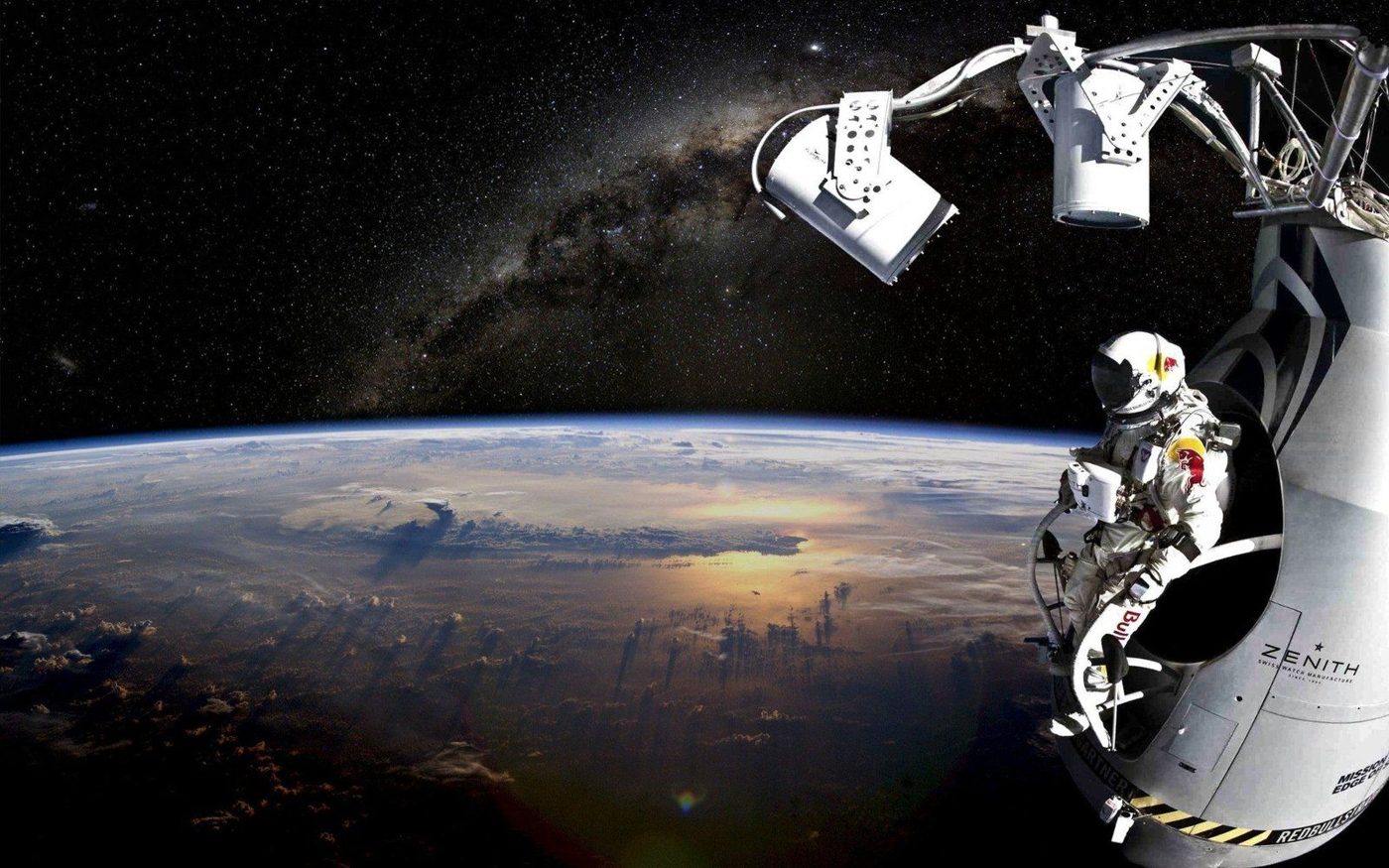
Before Felix Baumgartner stepped into the stratosphere, he had to prepare for a challenge much closer to home: his own response to fear, confinement, and extraordinary pressure.
A leap into history
On October 14, 2012, Baumgartner jumped from a capsule approximately 128,000 feet above Earth during the Red Bull Stratos mission. He became the first person to break the sound barrier in freefall, reaching approximately 843.6 mph.
The Fédération Aéronautique Internationale ratified an exit altitude of 38,969.4 meters and a maximum vertical speed of 1,357.6 km/h. The mission set records at the time for exit altitude, maximum vertical speed, and vertical distance of freefall. Read the FAI’s official record confirmation.
Claustrophobia… in a spacesuit
For an experienced skydiver, the unexpected obstacle was the pressurized suit. Its confinement and restricted movement triggered severe claustrophobia. Preparing for the mission meant learning to remain focused while wearing the equipment that would keep him alive.
Sports psychologist Michael Gervais helped Baumgartner work on breathing, self-talk, and his response to discomfort. Gradual exposure to the suit was part of building his ability to tolerate the demands of the mission. Read the contemporary account of his mental preparation.
Elite mental and brain performance training
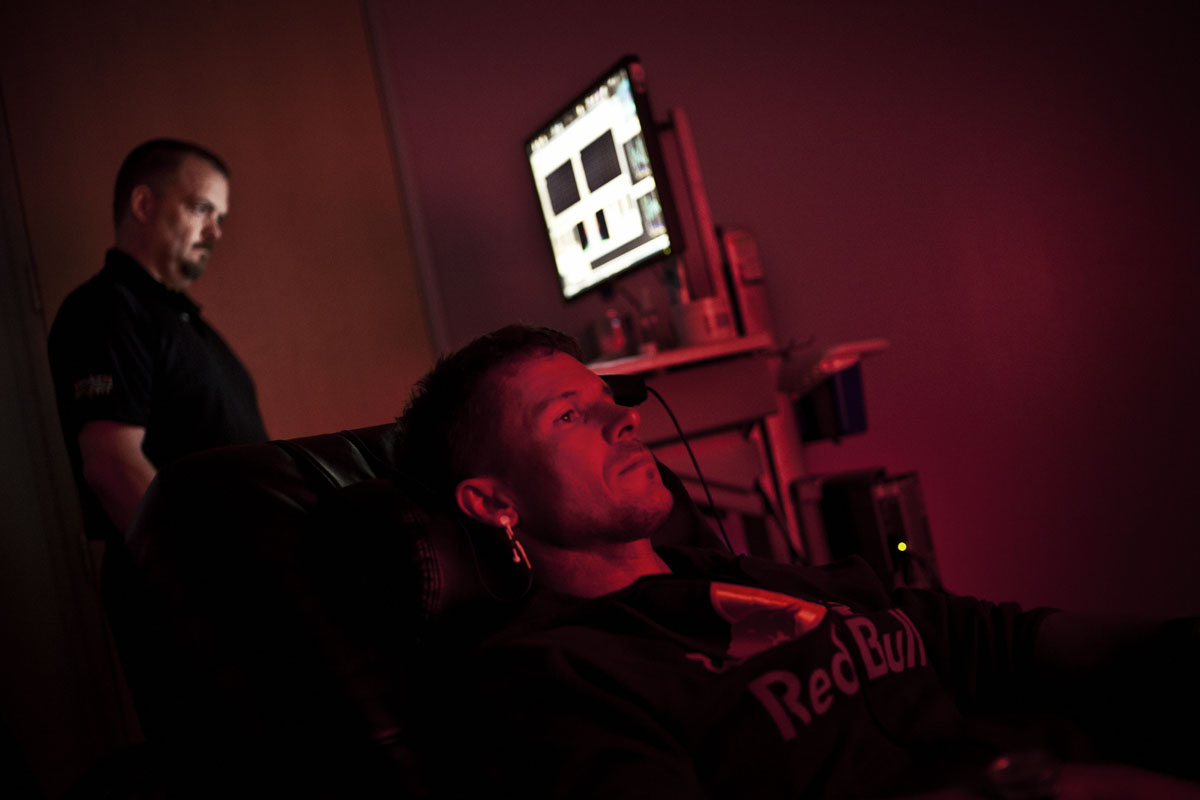
Brain Performance Center founder and Neuroscience Director Bryan Hixson was contracted to perform neurofeedback training for Felix Baumgartner as part of the Red Bull Stratos project. His work contributed to a broader performance effort that included sports psychologist Michael Gervais and performance coach Andy Walshe.
Bryan’s preparation began with an EEG brain map to examine Felix’s patterns of brain activity and inform a customized neurofeedback program. The training focused on practicing regulation through feedback from his own brain activity, alongside the mission’s psychological and physical preparation.
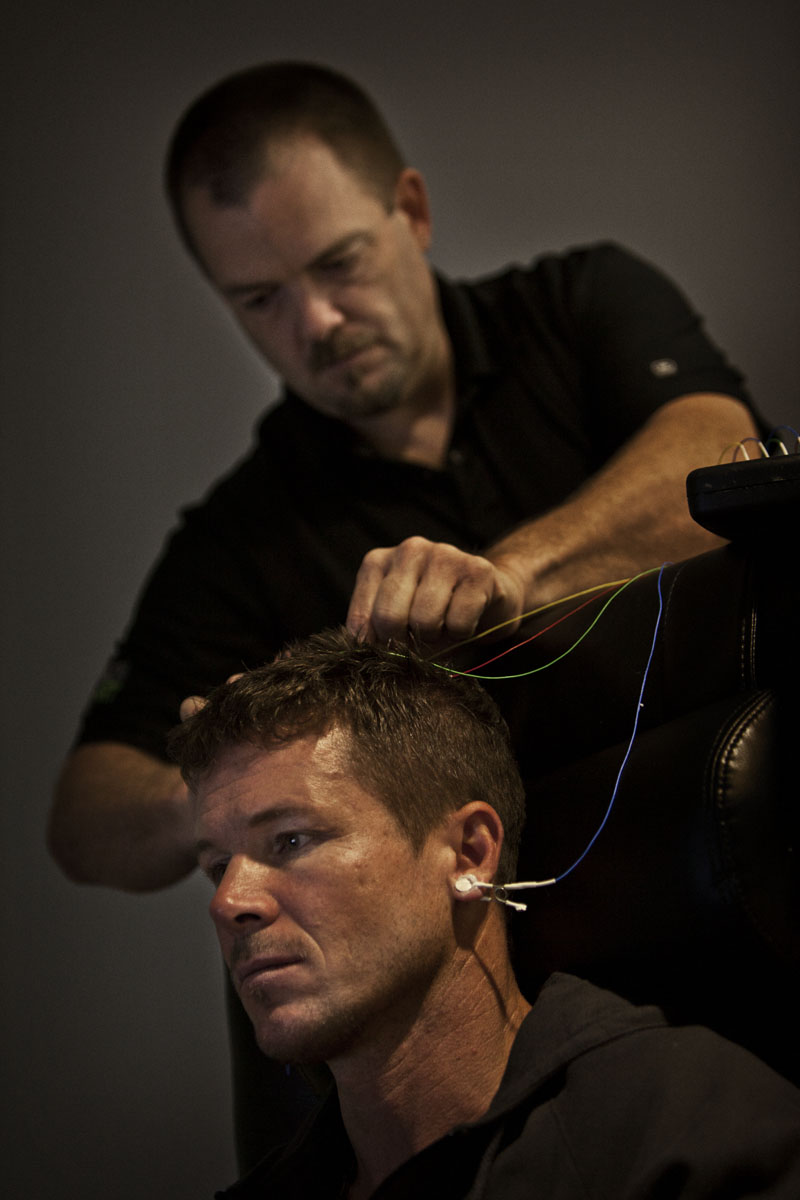
The broader preparation brought together several approaches: breathing and mindfulness to practice calm focus, progressive exposure to the suit and capsule, and individualized brain training. Each addressed a different part of performing under pressure.
Preparing under pressure
Before the final mission, test jumps from approximately 21 and 29 kilometers gave Baumgartner and the team opportunities to rehearse procedures and evaluate readiness. Those rehearsals complemented the work on the ground, bringing equipment, decision-making, and emotional regulation together under demanding conditions.
The jump depended on a coordinated team and years of preparation. Neurofeedback was one part of that larger effort, alongside engineering, medical oversight, physical preparation, and mental performance coaching.
Beyond the stratosphere
Red Bull Stratos showed how much preparation can sit behind a single moment of performance. The equipment had to be ready, and so did the person wearing it.
Most people will never step out of a capsule above Earth. But the goals of staying focused, recovering from stress, and responding more effectively to pressure matter in everyday life. At Brain Performance Center, we begin with the individual: understanding their brain activity, discussing their goals, and building a personalized training plan.
Your brain. Your potential.
Prepare for what matters to you.
Learn about brain mapping and neurofeedback at Brain Performance Center.
Schedule a consultation →Bryan Hixson’s involvement and training photographs are provided by Brain Performance Center. Mission statistics are sourced from the FAI; the account of psychological preparation draws on contemporary reporting linked above.